
DREAM 7: How Does a Nymph Feel?
Opened 3. October 2026
For thirty years, Banu Birecikligil has been painting dreamscapes where human, animal, and myth overlap. Her forests, vegetation, and cities are less places than states of consciousness. Figures trapped in social and personal constraints encounter beings within them that exist beyond alienation.
At the center of the exhibition is her new Struwwelpeter series: three large-scale works on paper that interpret the unwashed, uncombed boy from Heinrich Hoffmann's 1845 children's book—to this day Germany's proverbial cautionary tale—as an image of powerlessness and alienation. »I had such a feeling of decay in my own body or in my own soul,« she says about the time of their creation. In Turkish, there is a metaphor for this: the black water that flows into one's legs. In the images, this becomes a vascular system of black fluid, framed by the arum—a plant that smells like decay, is poisonous, and represents death.
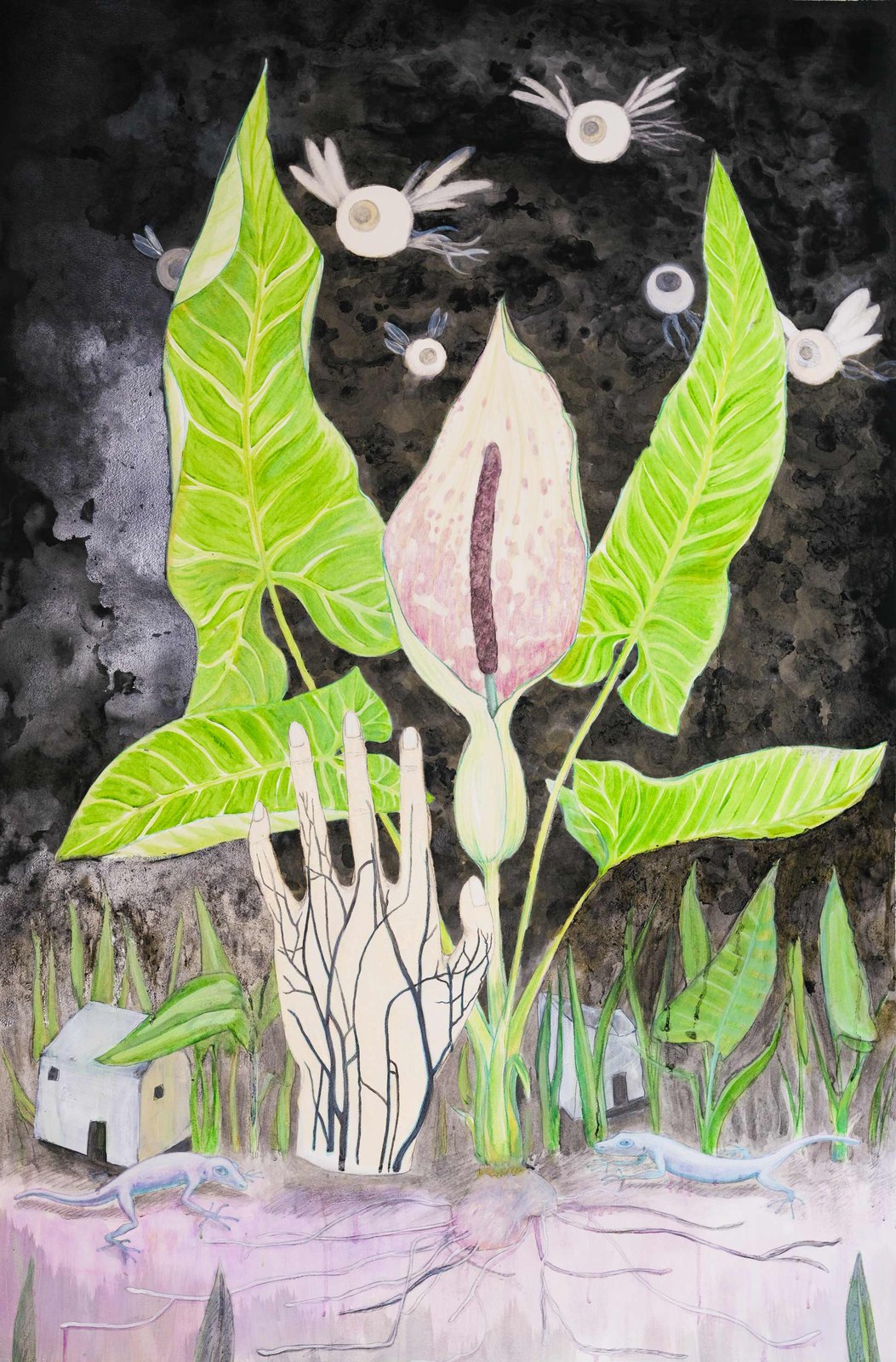
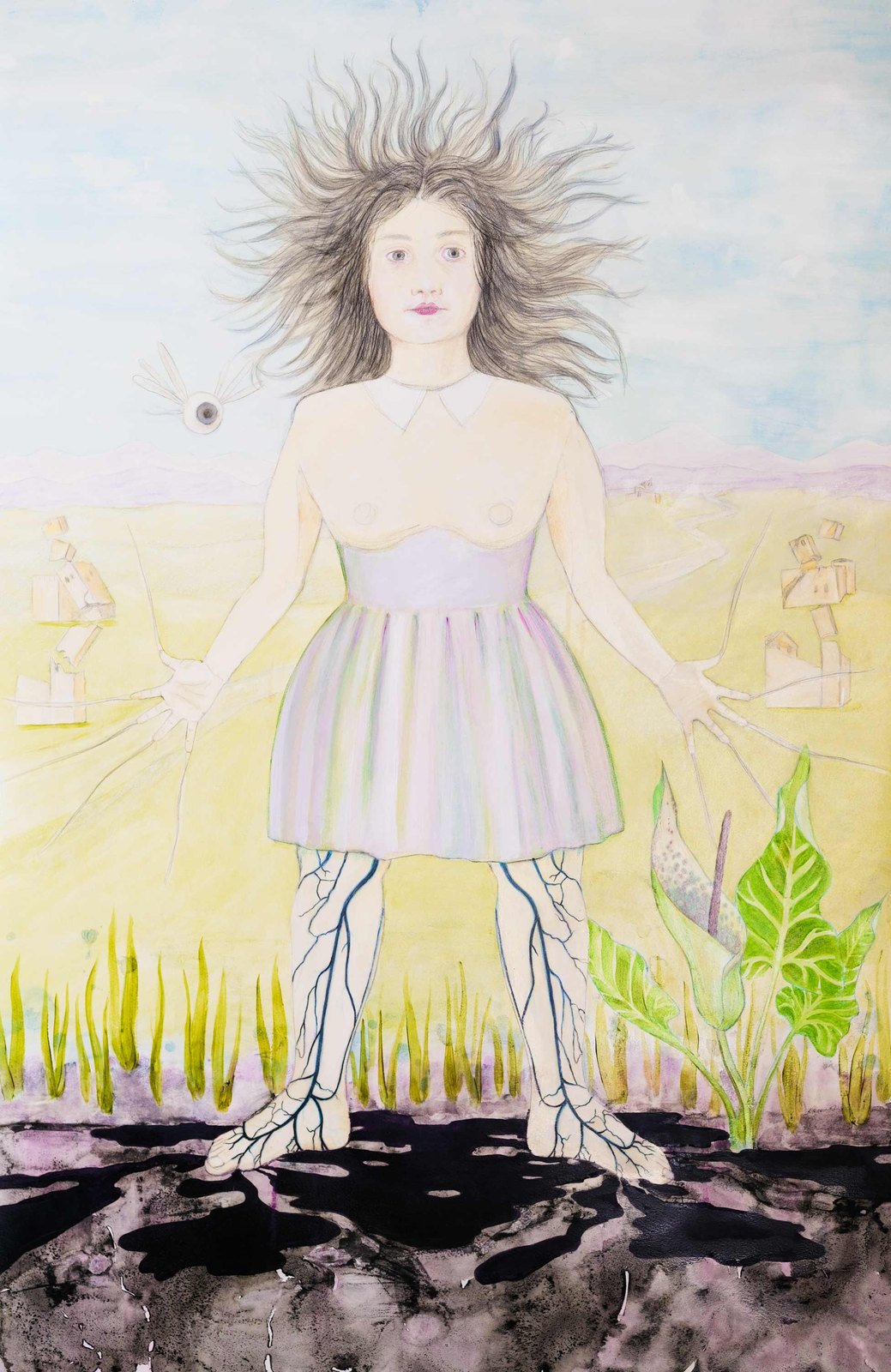
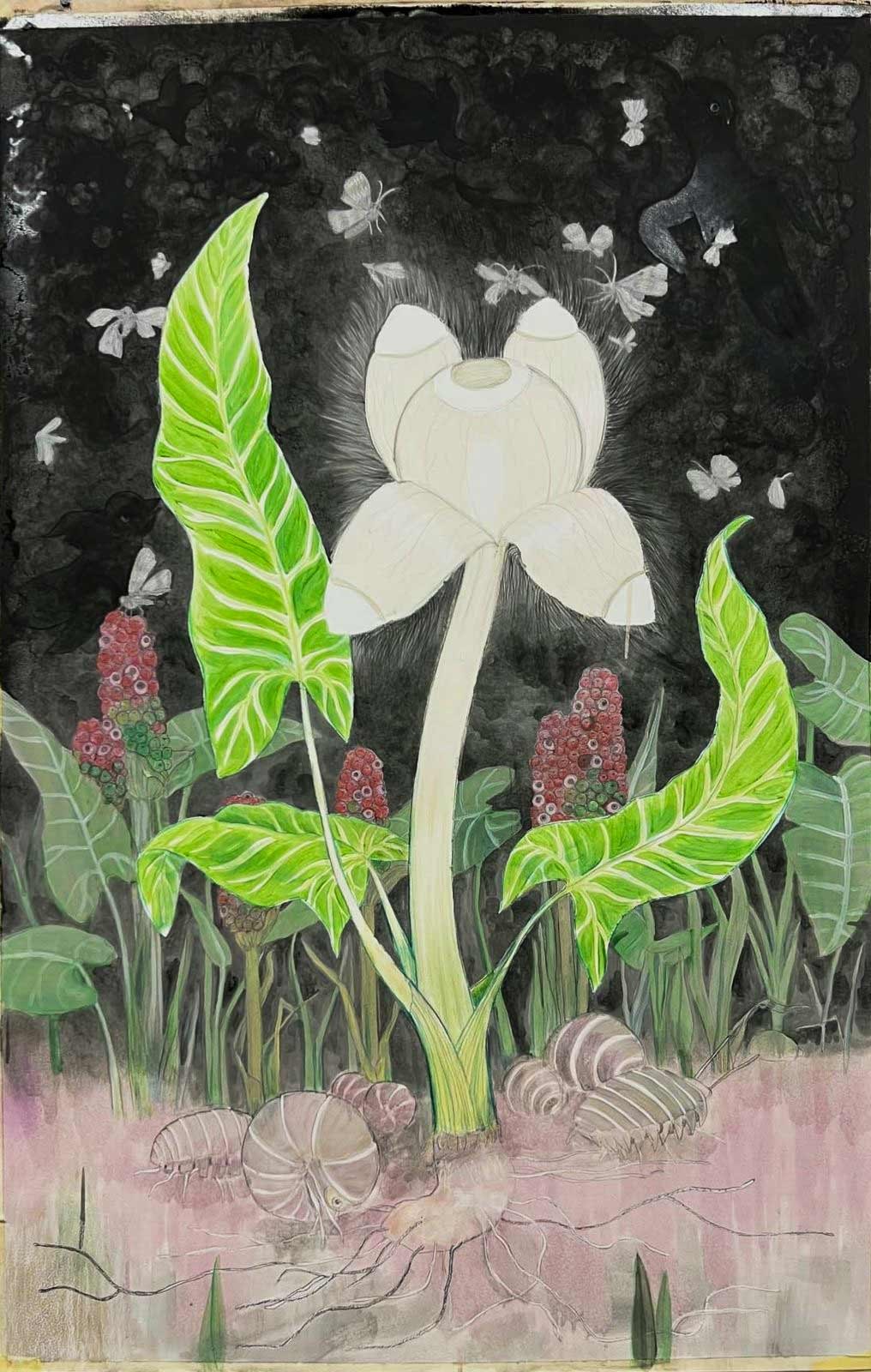
The series is executed on paper instead of the usual oil on canvas: more graphic, slower, without the possibility of painting over. A method that Birecikligil has deliberately borrowed from the botanical illustrators of the 17th to 19th centuries — women for whom scientific drawing was one of the few permitted creative mediums.
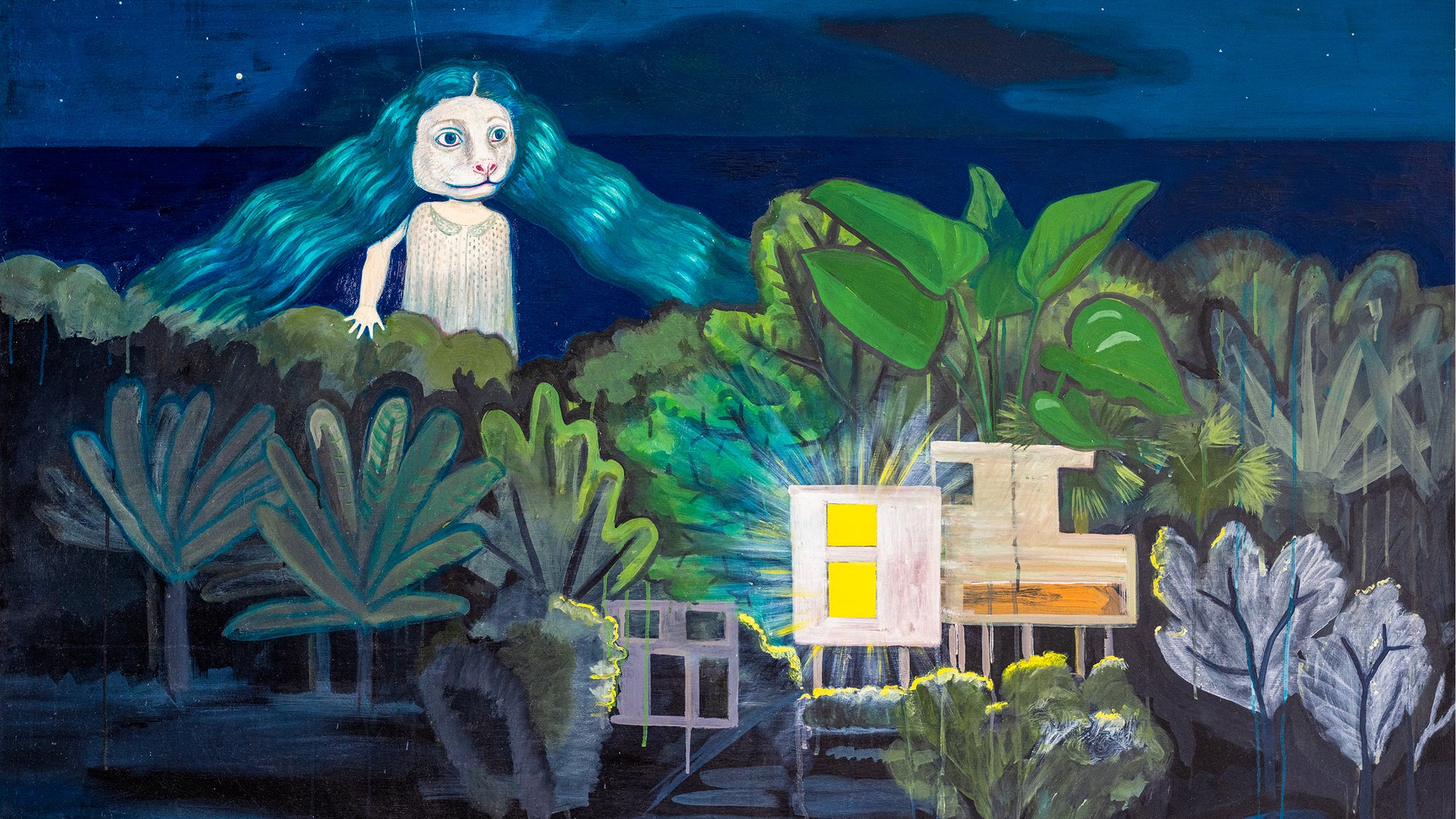
In front of them stands the oil painting »The Nocturnal Walk«: a female satyr traverses a nocturnal landscape, alongside a house that emits light. The mythical creature becomes the antithesis of alienation — a representation of consciousness that could be free from societal oppression and the constraints of the self. »I wonder how animals perceive the world and how they feel and think,« says Birecikligil. »And this whole mythological world of intermediate creatures, between human and animal.«
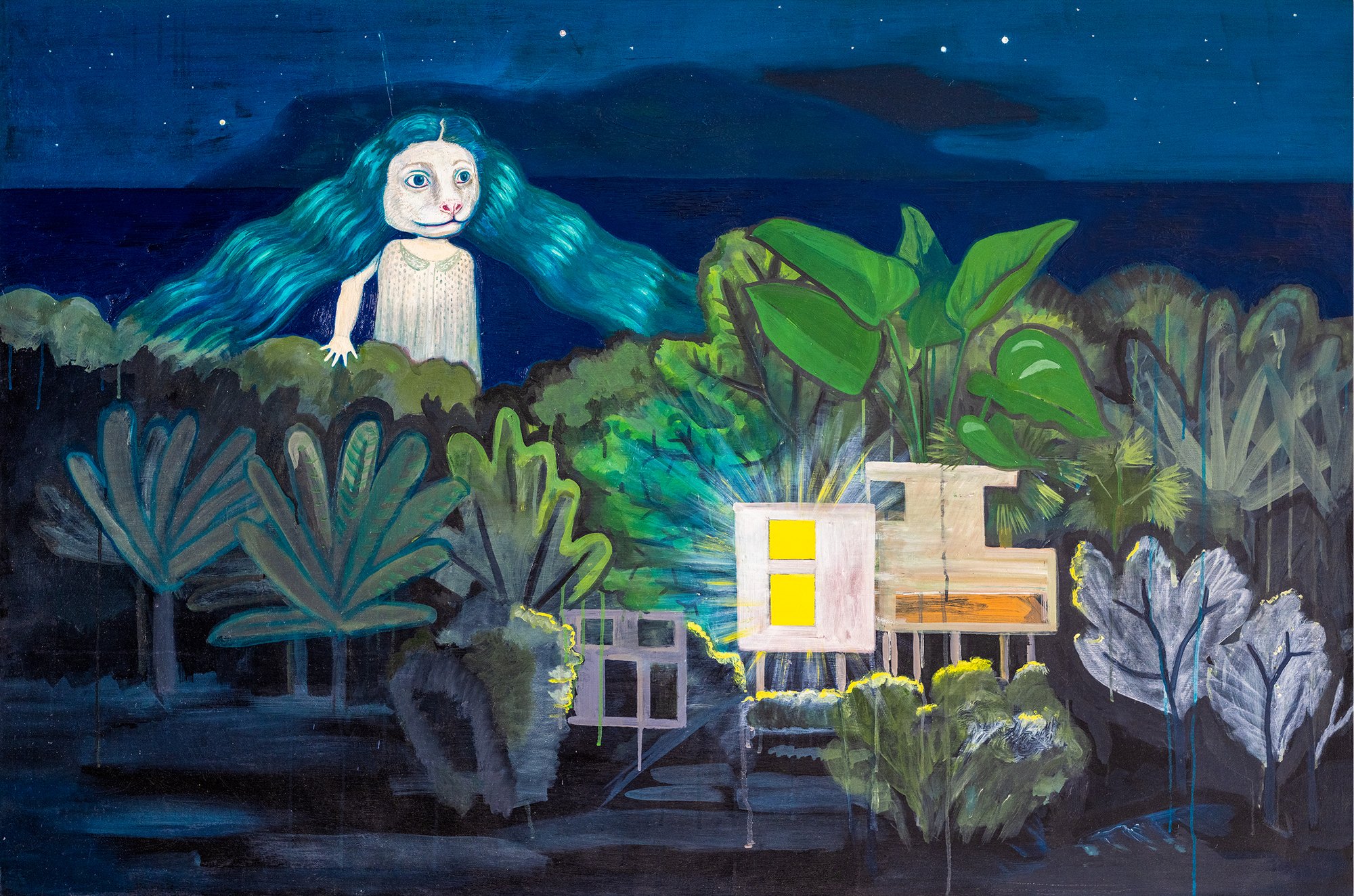
The image appears as a limited edition. Lovelab Edition #4, Edition of 7 in each of three sizes.
This is not an esoteric question. Ever since Descartes, Western science has regarded the animal as a machine. It took four hundred years until experiments recently proved the opposite, making it possible to say this again. »You can clearly see that an animal has feelings,« says Birecikligil. Where the willingness for empathy is lacking, everything becomes possible: domination over living beings, over humans, over the entire planet. These are the psychopathic traits of our society.
In the artist's new video collaboration with Tim Ra, the journey of the satyr leads through witnessed suffering, pain, and tears to new growth. Empathy is key to this.

By loading the video, you agree to YouTube's privacy policy.
Learn more
»Darkstar« — Video collaboration by Banu Birecikligil and Tim Ra
Fittingly, the exhibition features thematically selected prints from thirty years of painting: Cassandra, who knows everything in advance and whom no one believes, with severed hands on her head. A headless mermaid who is left with two wires instead of arms. A self-portrait entitled »Powerlessness.« Again and again the same figure—a woman who sees and knows and yet cannot act.
In conversation
How are Birecikligil's dream landscapes created? Tim Ra visited Banu Birecikligil in her studio in Bodrum.
By loading the video, you agree to YouTube's privacy policy.
Learn more
Banu Birecikligil in her studio in Bodrum
→ Read the full interview: »How Does a Nymph Feel?«
Events in this Dream
Opening »How Does a Nymph Feel?«
Struwwelpeter as an image of powerlessness, a female satyr as its counter-image. From 7 pm; public talk with Banu Birecikligil at 8 pm.