
The Grandmothers Want to Go Home
Why the Stone Grandmothers in Berlin’s Ethnological Museum want to return to Colombia – and what their homecoming has to do with us. The Colombian delegation of SIN TEMER invites you to a dialogue.
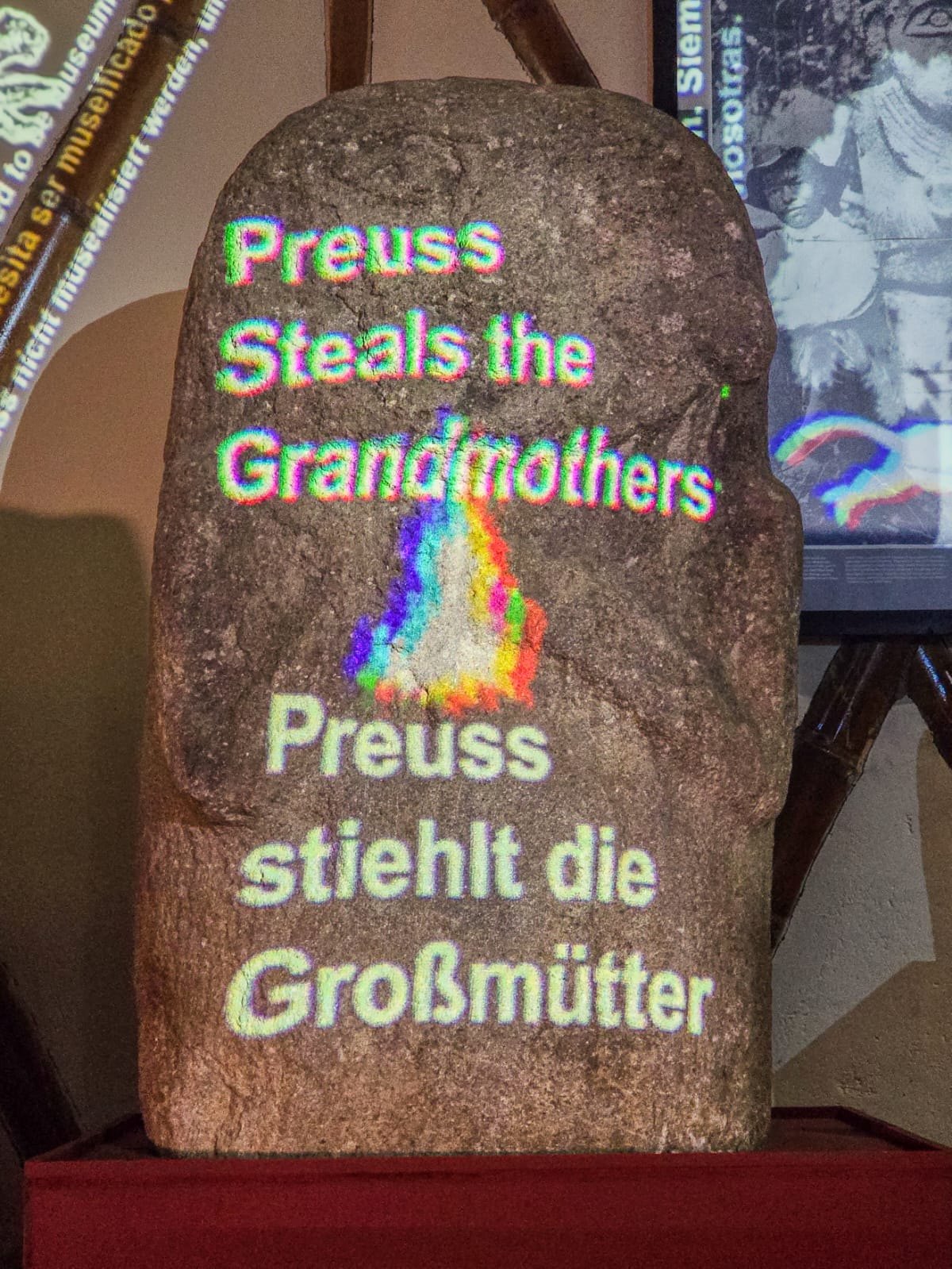
In Berlin’s Ethnological Museum lie stones that are not stones – and that did not come here of their own accord. For the Yanakuna of San Agustín, Colombia, they are their grandmothers. They belong to a living territory of springs, rivers and mountains and are missed there to this day. From 1913 onwards, the ethnologist Konrad Theodor Preuss excavated the sculptures in southern Colombia and brought them to Berlin. Twenty-three stone sculptures from San Agustín and Briceño are still held by the museum, along with six heads of further sculptures.
Asking about their homecoming is not merely a question of administration or ownership. It calls for a fundamental shift in perspective: are these stones just objects for us to look at and display – or are they subjects themselves, who look back at us, are in relationship with their environment and belong to a living world?
On 13 November, the Colombian delegation of SIN TEMER (“Without Fear”) is our guest at Lovelab Dreamspace. For years, its members have accompanied the rematriation of the Stone Grandmothers. In conversation with the audience, representatives of the Indigenous Misak Misak and Yanakuna peoples come together with committed members of a Colombian civil-society initiative that accompanies the process of return. Also present is AISO, a movement working for the political self-determination and the rights of Indigenous communities in southwestern Colombia.
The evening will be held in Spanish and English: Spanish contributions will be interpreted into English, and English contributions into Spanish. Places are limited and registration is required.
Whom do we look at in the display cases? Who looks back?
At the centre are the relationships between the Stone Grandmothers, water beings and other human and non-human life forms of an Indigenous territory. Which ecosystems and balances are connected to their return? And what forms of reciprocity and responsibility can emerge when we listen to these beings instead of putting them on display?
The evening opens with ceremonial cacao. Then a Círculo de Palabra y Escucha unfolds – a circle of word and listening. Instead of lectures, it is about sharing experiences, listening to one another and developing questions together. A short film by SIN TEMER will also be shown.
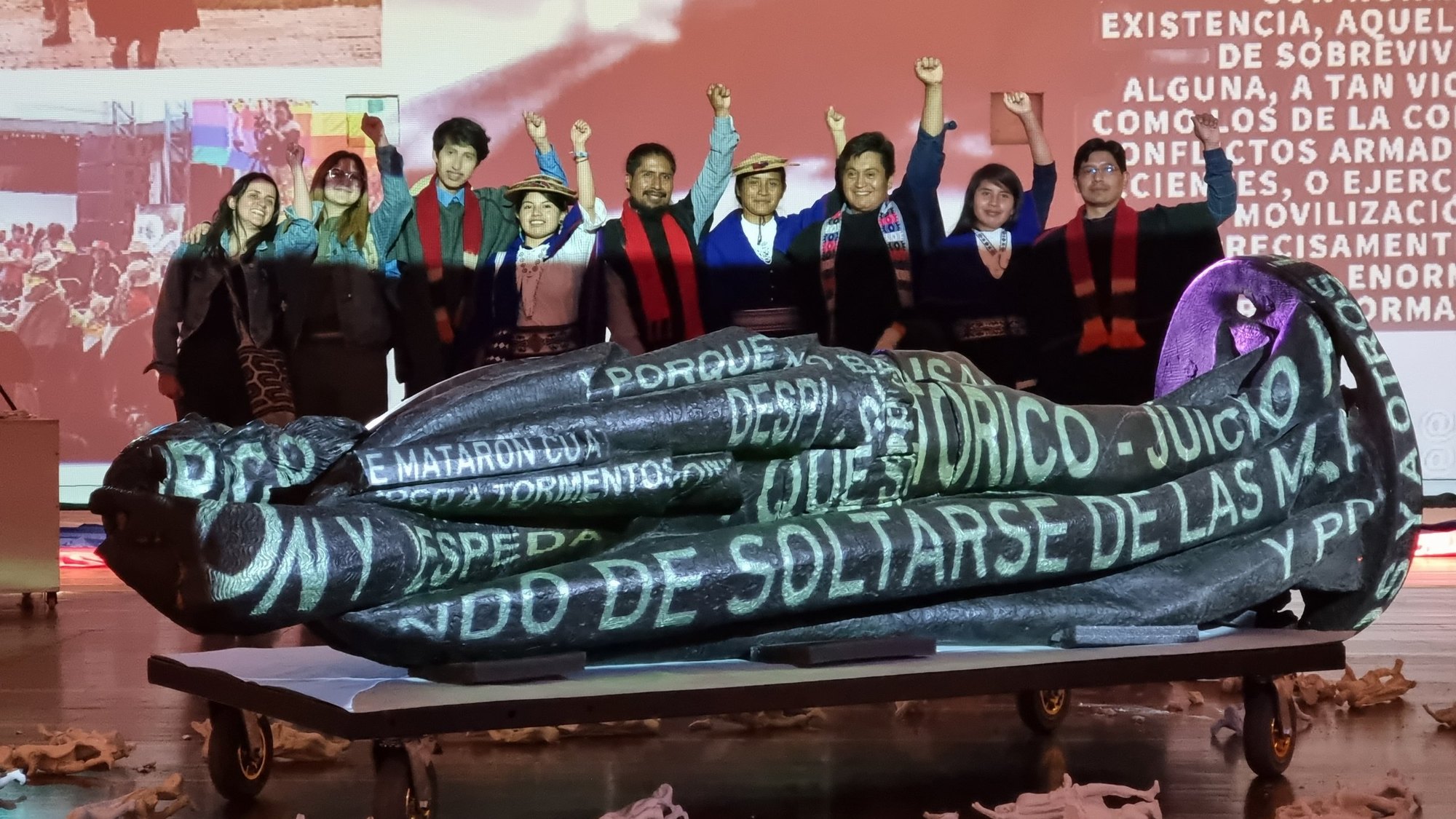
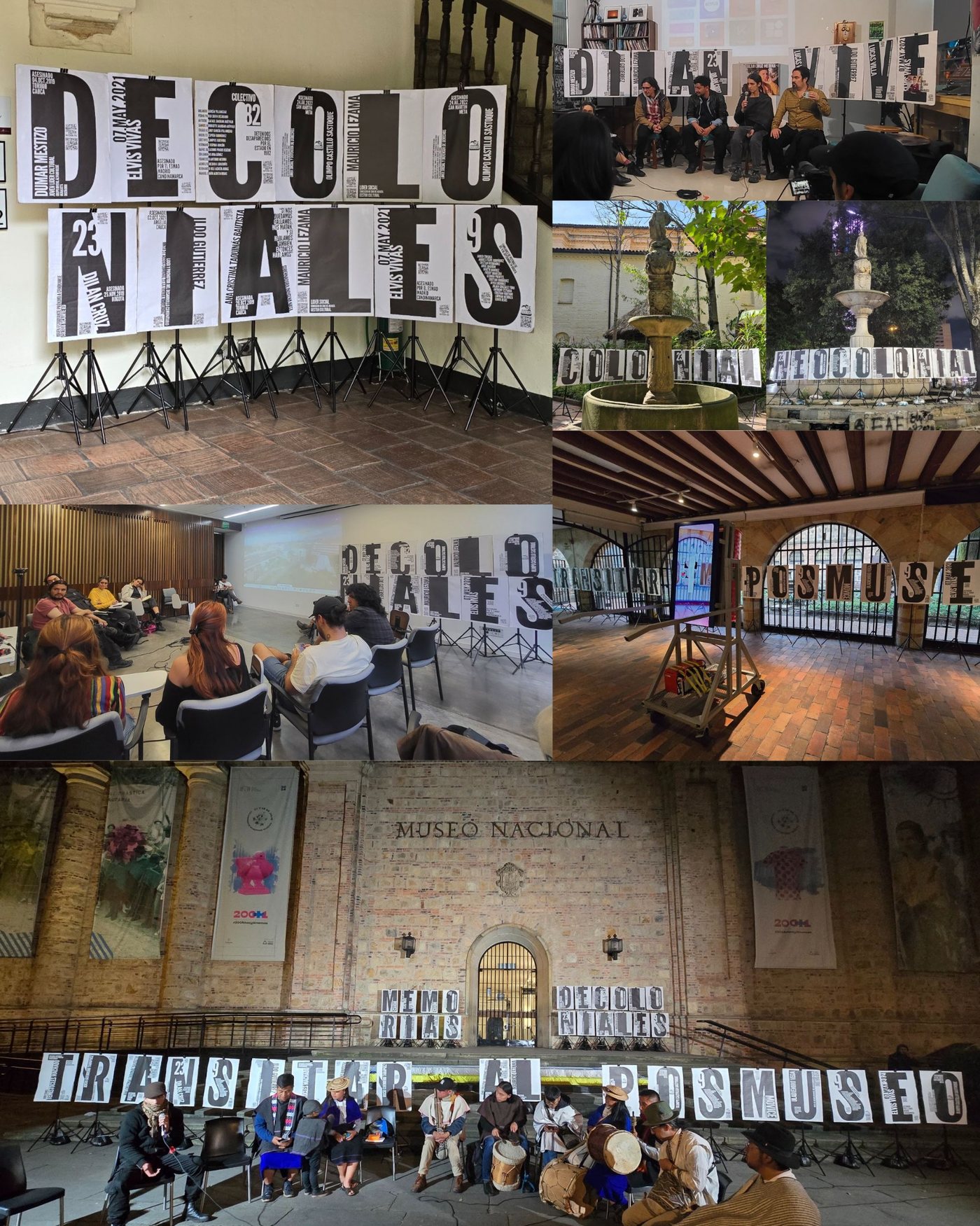
The circle is accompanied by video mapping from the artist collective Posmonumenta/Videocrática, projected onto the open wall surfaces and the mobile boards of the Posmuseo project. Since 2020, the collective has realised more than sixty interventions in public space with its muralismo fotónico, engaging with memory, colonial heritage and contested monuments – among them in Bogotá and at the National Museum of Colombia.
At Lovelab, the light projections overlay the dreamscapes of Banu Birecikligil. Her exhibition “How Does a Nymph Feel?” (DREAM 7) is devoted to the theme of consciousness. Where does consciousness begin, and to whom do we grant it? Only to humans? To nymphs as well? Or even to stones that we have so far regarded as lifeless objects?
For Lovelab, the evening is part of an ongoing engagement that has already taken shape in, among others, the GENESIS exhibition and the exhibition on the art and cosmology of the Shipibo. At its heart are Indigenous knowledge systems that reach far beyond ethnographic material, as well as an understanding of aliveness and reciprocity that the biologist and philosopher Andreas Weber describes with the term indi-geniality (German: Indigenialität). Culture is understood here as a relationship with all that lives – including those beings that a museum logic long ago declared dead.
7:30–9:30 pm · Doors 7:20 pm
Lovelab Dreamspace, Pappelallee 25, 10437 Berlin
Language: Spanish and English – interpreted in both directions (Spanish ↔ English)
Limited places, registration required
Programme
7:30 pm – Welcome by Tim Ra, ceremonial cacao and start of the video mapping
7:35 pm – Short film by SIN TEMER
7:42 pm – Introduction by Julián Santana-Rodríguez
7:50 pm – Círculo de Palabra y Escucha with the Colombian delegation
8:50 pm – Conversation with the audience, moderated by Tim Ra
9:20 pm – Closing
With: Jhon Alirio Córdoba Quinayas, Carla Isabel Espinosa Muñoz, Martha Jeannette Gil Gómez, Indy Piapya, Marleny Deli Yalanda Cuchillo, Adriana María Velasco Muelas and Julián Santana-Rodríguez.
An event as part of SIN TEMER 2026 – Rematriations and Re-Existences (Fundación Colectiva El Cruce / Posmonumenta / Videocrática).
More SIN TEMER dates in Berlin
Tue 10 Nov, 3–8 pm · Spore Initiative, Hermannstraße 86, 12051 Berlin
Fri 13 Nov, 4–6 pm · Babylon, Rosa-Luxemburg-Straße 30
Sat 14 Nov, 7:30–9:30 pm · SAVVY Contemporary, Reinickendorfer Straße 17, 13347 Berlin
Tue 17 Nov, 3–7 pm · SAVVY Contemporary
How Does a Nymph Feel?
Exhibition by Banu Birecikligil · until 23 January 2027