
A Us Without an Enemy
The Political Song, Igor Levit, Danger Dan, and Spaces of Empathy
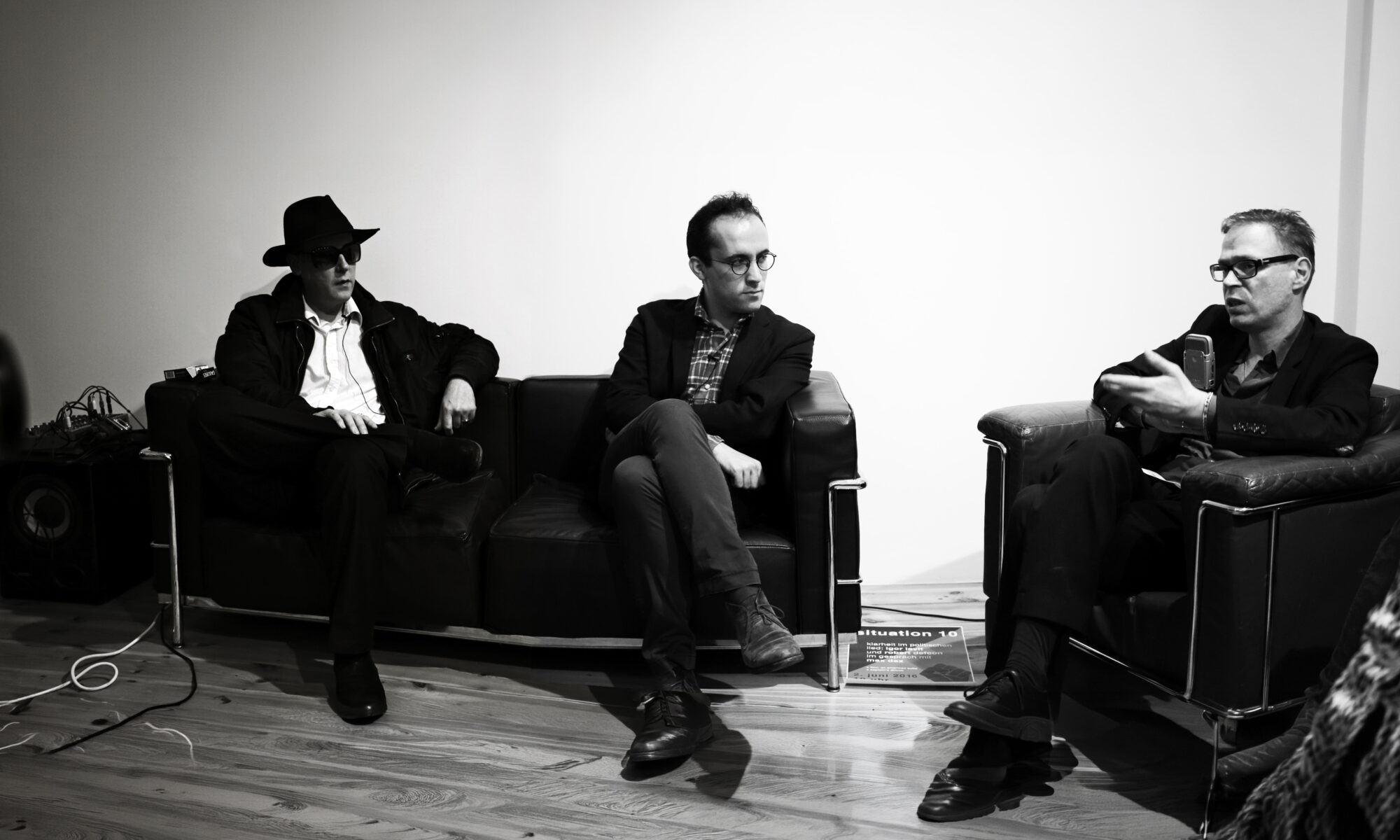
Ten years ago, I had the honor of being a guest with Igor Levit at one of Max Dax's legendary »Situations.« Our topic was the political song. My film »We Are Anonymous,« a musical take on the Iraq War, was shown. Afterward, Levit played piano music from a time when musical avant-garde and socialist utopia were still closely linked – a passionate performance that left a deep impression on me.
In the conversation moderated by Max Dax, it became clear that Levit and I have two fundamentally different ideas of what a political song is and can be. Levit spoke enthusiastically about his performances of old workers' songs and the deep emotion of his audience. It was about solidarity, community, and a strong "we.".
With »We Are Anonymous,« I tried something different: a musical form of grief work—using the means of electronic music. No mobilization, no identity formation, no »us against them,« but the creation of a space for loss, doubt, and compassion.
I distrust any "we" that only forms by differentiating itself from others. A "we" that defines itself through demarcation already carries the seed of authoritarianism within it – regardless of whether it calls itself national, religious, or socialist. The "we" that interests me emerges differently. Not through common enemies, but through common humanity. Not through identity, but through empathy.
Max Dax described this difference at the time in his portrait of »We Are Anonymous« in the Frankfurter Rundschau. The work, he wrote, »refrains from crude political pronouncements,« »does not trigger a sense of us-and-them, nor does it deliver singalong slogans.« Instead, he said, it was driven by »sorrow and empathy for a world out of joint.« In retrospect, I believe he described my concept of the political song better than I could have myself at the time.
»We Are Anonymous« emerged in response to the Iraq War and the beginning of an era in which torture, drone warfare, mass surveillance, and a permanent state of emergency were politically normalized under the banner of the »War on Terror.« This war not only devastated the Middle East and forced millions to flee but also changed our Western democracies. Anti-Islamic and anti-Semitic sentiments gained renewed social visibility, the Snowden revelations exposed the extent of state mass surveillance, and military violence beyond international law once again appeared in many places as a legitimate tool of politics.
Today's right-wing extremism cannot be explained by this alone. Its causes run deeper. But I believe that societies change when they get used to dividing people into friends and enemies, letting exceptions become the rule, or accepting violence as a normal political tool. Such dynamics are found in very different political systems – in liberal democracies as well as in authoritarian regimes or religious dictatorships. Wherever enemy images and the devaluation of human life become political normality, the ground on which authoritarian movements thrive grows. The developments in the USA, the policies of the Israeli government, and the renewed escalation in the Middle East are painfully demonstrating this to us right now.
That's why the debate around Danger Dan and Igor Levit concerns me. Not because I share their political aesthetic, but because their diagnosis is correct: it's five past twelve. Right-wing extremist and authoritarian ways of thinking are increasingly infiltrating the societal mainstream. And democratic forces are increasingly reacting by adopting right-wing narratives instead of offering their own vision in opposition.
I expressly share the fundamental impulse of »No Fear.« Fear is a bad advisor. Democracy needs courage and commitment. I consider the fact that the joint appearance of Igor Levit and Danger Dan on »Die Anstalt« was not broadcast to be a wrong decision by ZDF. Not because Danger Dan would be right about everything, but because we must have a serious and deep discussion about how to deal with the authoritarian tendencies in our societies.
But at one point our paths diverge. Where the song calls for violent fantasies, its persuasiveness ends for me. Not because violence is never necessary. But because democratic movements lose their greatest strength when they begin to adopt the language or logic of their opponents.
Authoritarian thinking begins where compassion becomes selective. Where we mourn for some and justify the deaths of others. Where people no longer appear as people, but only as categories. Fascism is the most radical manifestation of this view – but not its beginning.
This is why I believe that antifascism must be more than just resistance. It must create a different culture. Spaces where people encounter each other instead of perceiving each other as opponents. Spaces where art, conversation, and joint action are more important than a "us vs. them" mentality. Spaces for dialogue, like Max Dax created. Spaces like we are trying to create in Lovelab.
The political song, as I understand it, is a defense of empathy. That's why it gets by without enemies. It serves as a reminder that much of what we put out into the world comes back to us.
When I released »We Are Anonymous,« I took a line from a video by the hacker collective Anonymous and made it the guiding principle of the project:
»Understanding brings understanding. Truth brings truth. Love brings love. What do we bring?«
»We Are Anonymous« - Link to the video in the comments
Photo: Benjamin Biel (back then still with hat and sunglasses as Robert Defcon)